

Jim has published six books in theology/spirituality. See below for more information on these books. See the “Poetry” page for his two books of poetry.
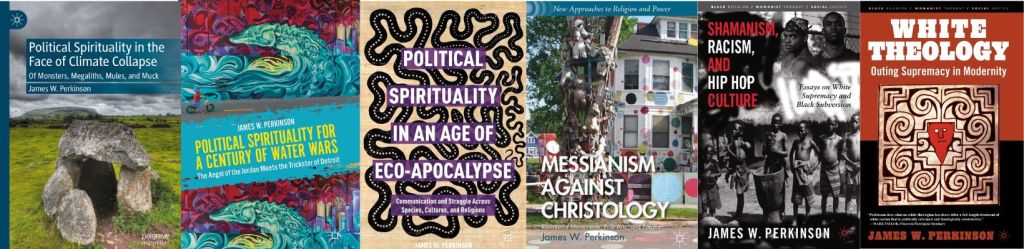
Political Spirituality in the Face of Climate Collapse: Of Monsters, Megaliths, Mules, and Muck
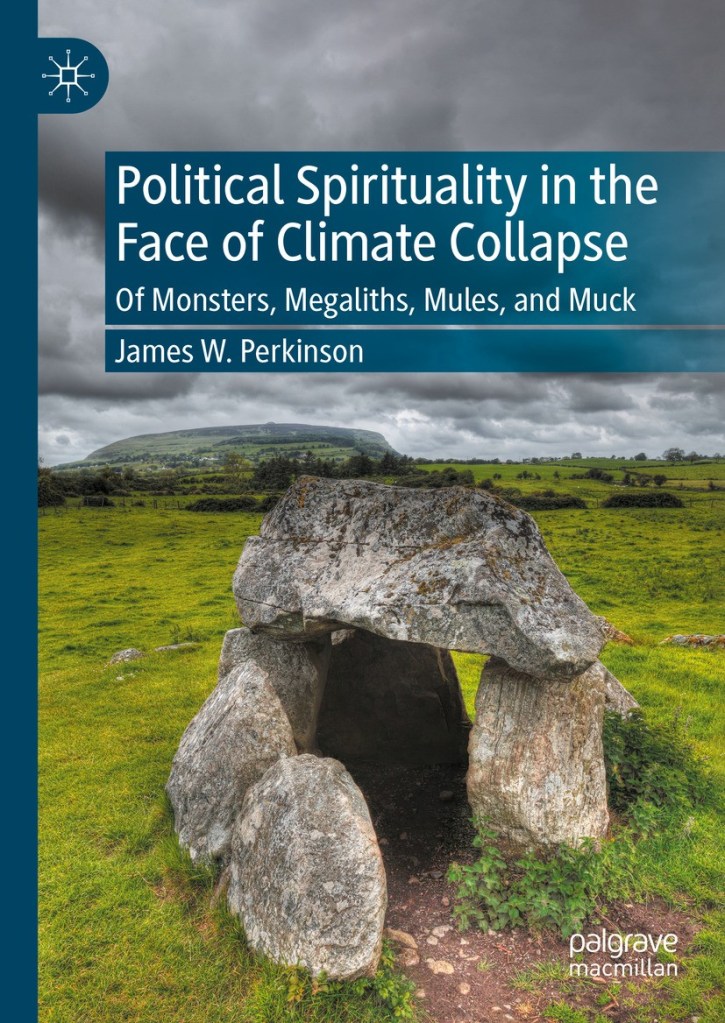
Palgrave McMillan (2024)
This book takes its motive force from our contemporary climate crisis. It seeks to reorient human (and especially Christian) understanding, towards a more ecologically-focused, indigenously-informed way-of-living. James W. Perkinson argues that our current eco-climatic and socio-political emergency is the culmination of a 5,000-year history of supremacist “settlement,” in which city-states first emergent in Mesopotamia and Egypt not only begin coercively organizing labor into surplus production and ecosystems into inordinate and destructive yields of “goods,” but in the process, also simultaneously “deform” the Spirit-World “haloing” of natural phenomenon into outsized service of imperial reach. Perkinson recognizes globalized humanity as an emerging monstrosity destroying both human culture and the world. How we re-envision and revalue, at our critical juncture, our inescapable interdependence with the more-than-human world as peer and teacher and even “elder,” is the central theme that throbs below the surface of the very disparate topics commanding attention in each chapter.
Political Spirituality for a Century of Water Wars: The Angel of the Jordan Meets the Trickster of Detroit

Palgrave McMillan (2019)
This book offers resources for re-imagining the biblical vision of water for a time quickly emerging as “the century of water wars.” It takes its urgency from the author’s 5-year activist engagement with a grass-roots-led social movement, pushing back on Detroit water shutoffs as global climate crises intensify. Concerned with both white supremacist “biopolitics” and continuing settler colonial reliance on the Doctrine of Christian Discovery, and beholden to an interreligious methodology of “crossing over and coming back,” the text creatively re-reads the biblical tradition under tutelage to the mythologies and practices of various indigenous cultures (Algonquian/Huron, Haitian/Vodouisant, and Celtic/Norman) whose embrace of water is animate and spiritual as well as political and communal. Not enough, today, merely to engage the political battle over water rights, however; indigenous wisdom and biblical prophecy alike insist that recovery of water spirituality is central to a sustainable future.
Political Spirituality in an Age of Eco-Apocalypse: Communication and Struggle Across Species, Cultures, and Religions
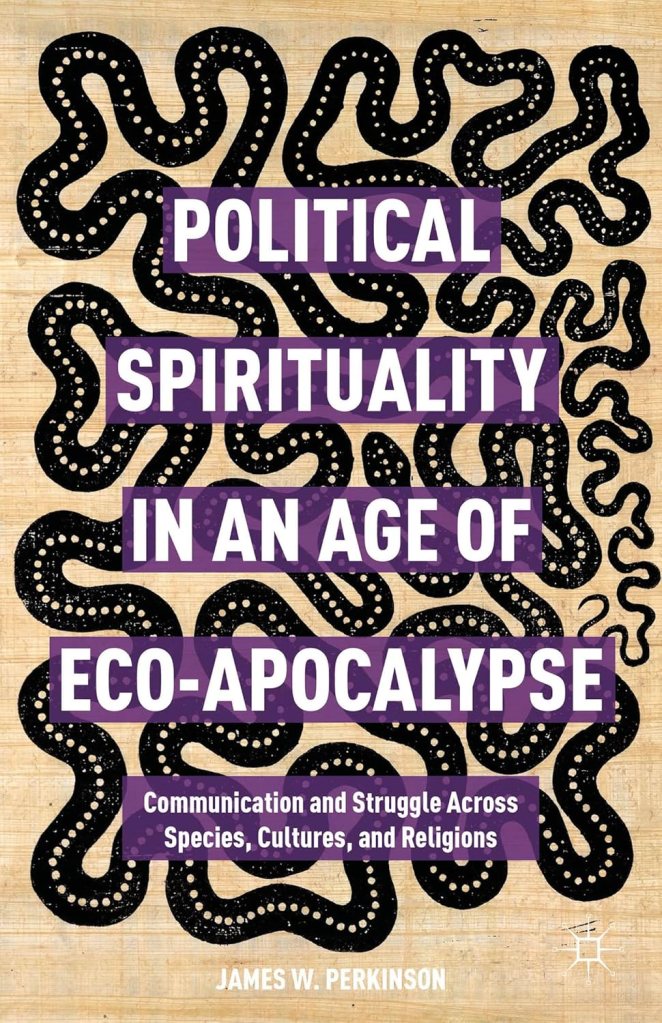
Palgrave McMillan (2015)
This book ‘hunts and gathers’ across different historical epochs and situations, juxtaposing biblical materials and hip-hop, Christian colonialism and vodou, personal experience and racial politics, poetics and high theory, in order to challenge the current crisis of sustainability from the perspective indigenous communities and deep ancestry.
Messianism Against Christology: Resistance Movements, Folk Arts, and Empire

Palgrave McMillan (2013)
Messianism Against Christology: Resistance Movements, Folk Arts and Empire is a work committed to re-thinking the Christian tradition from the point of view of messianic movements of eco-sustainability and social justice rather than magnified individuals. Framed by considerations of political struggle and insurgent folk art in contemporary Detroit and ancient Ethiopia, the work concentrates its attention on the biblical tradition, teasing out memories of pastoral nomad resistance not entirely erased by the repressions of agricultural empires, that are revitalized in the prophetic movements of Elijah, the Baptist and Jesus. It also underscores the relevance of these “little tradition” practices for eco-politics and indigenous solidarity efforts today.
Shamanism, Racism, and Hip Hop Culture: Essays on White Supremacy and Black Subversion

Palgrave McMillan (2005)
Shamanism, Racism and Hip Hop Culture is a groundbreaking collection of essays exploring the five hundred year history of white Christian hegemony that has so profoundly shaped American society. James W. Perkinson explores the idea that American identity and history are profoundly informed by an on-going interweaving of white entitlement and black disenfranchisement that constrains other forms of cultural struggle.
White Theology: Outing Supremacy in Modernity

Palgrave McMillan (2004)
White Theology re-examines white race privilege throughout history and its relationship to black theology. James W. Perkinson articulates a white theology of responsibility responding to the claims of James Cone (and other black scholars) that serious engagement with history and culture must be at the heart of any American projection of integrity or salvation in the modern period. Perkinson interweaves autobiography and postcolonial analysis, history, and phenomenology to explore white supremacy and the future of religious studies. This is an essential and groundbreaking book for courses in religious studies, African American studies, and theology.
 Dr. James W. Perkinson